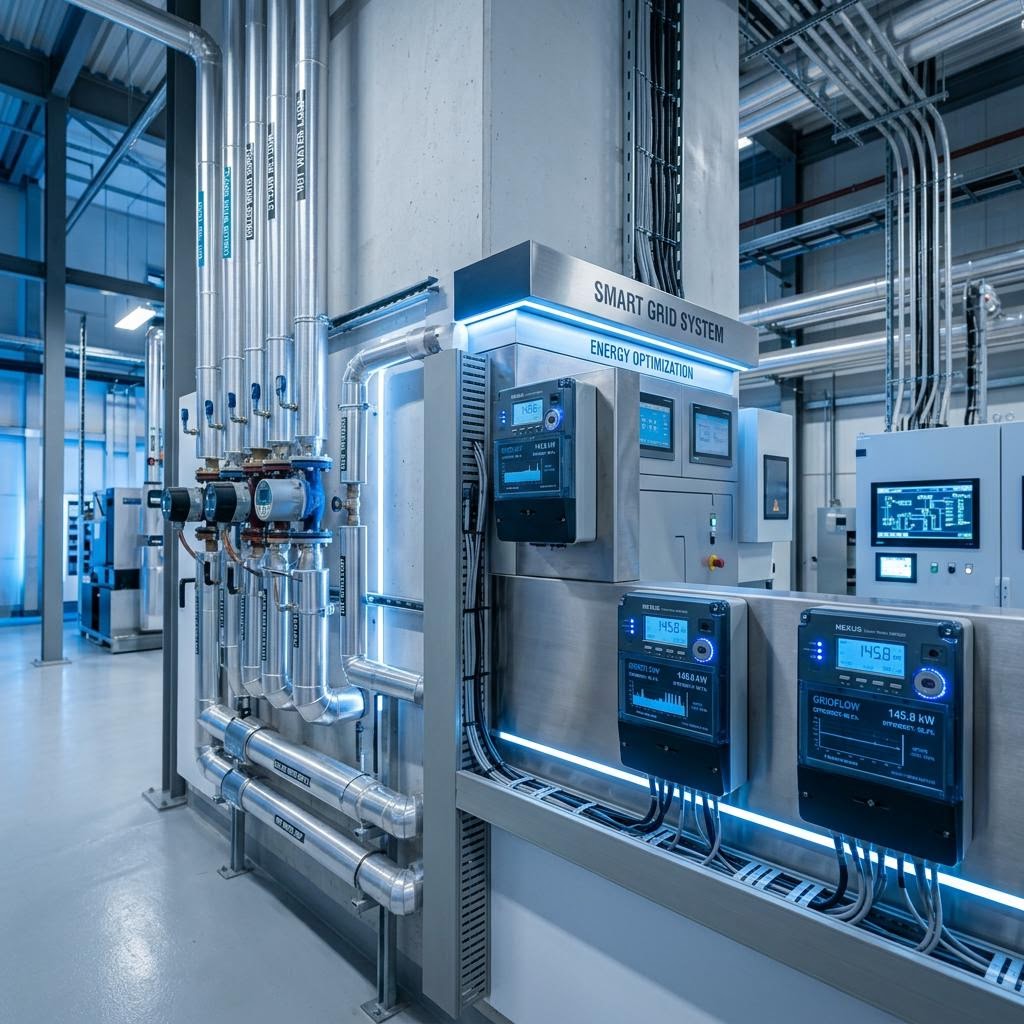
What is an energy audit?
It analyses energy use and consumption to identify saving opportunities and possible measures. The level of detail depends on the site and objectives.

Reduce operating costs and emissions. We measure actual consumption to plan projects with strong returns on investment.
With volatile energy prices and growing pressure to decarbonise (Scopes 1 and 2), energy efficiency is an essential first step for industry.
We combine engineering and management expertise to assess energy use from every angle—from procurement and production processes to heat losses and auxiliary systems.
Mapping energy sources
ISO 50001 for continual improvement
Feasibility studies for lighting upgrades, cogeneration, inverters and heat recovery
We conduct energy audits under Italian Decree 102/2014. They are mandatory for certain large and energy-intensive companies and can also help SMEs understand their cost drivers. We build energy-consumption models.
Implementing ISO 50001:2018 provides a systematic approach to energy performance. It helps establish policies, energy performance indicators (EnPIs) and baselines (EnBs), and may exempt eligible businesses from energy audits under Italian Legislative Decree 102/14.
You cannot improve what you do not measure. We design continuous hardware and software monitoring to spot consumption changes in real time and measure savings after improvements.
It analyses energy use and consumption to identify saving opportunities and possible measures. The level of detail depends on the site and objectives.
Requirements apply to certain categories, including large and energy-intensive companies under current criteria. Eligibility and deadlines should be checked against official sources for each case.
An audit analyses consumption and measures at a point in time; ISO 50001 is a management system for continual energy performance improvement. They can work together.
EnPIs are energy performance indicators; an EnB is the reference used to assess performance. Both should be selected to reflect available data and significant energy uses.
In some cases, a compliant and certified system may qualify for an exemption under the rules. Requirements and conditions must be checked against official sources for the specific case.
It typically collects bills and data, maps energy uses and analyses processes and systems. The work may include site visits, measurements and an improvement plan.
Consumption data, schedules, loads and operating conditions can be compared to find anomalies and opportunities. Expected savings should be estimated and verified, not guaranteed.
Monitoring helps identify changes, compare periods and assess the effects of measures. Conclusions depend on sound measurement and interpretation of the data.
Options depend on systems and processes and may include controls, drives, heat recovery, lighting or cogeneration. Feasibility should be assessed before estimating costs and benefits.
Yes. A review can help an SME understand consumption and assess measures even where no audit obligation applies. Its depth can be proportionate to the company’s needs.